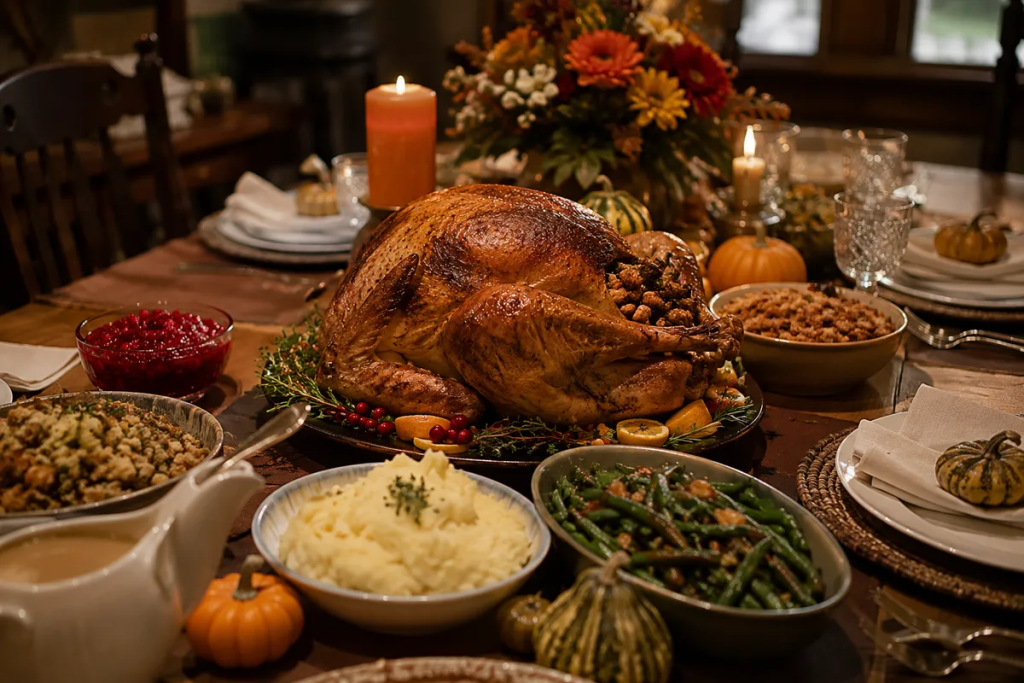
My name is Holly Forsyth. For 40 years I worked in food and gatherings — the kind of work that fills up other people’s best days. I started with one rented kitchen and a borrowed van and built something I was quietly proud of. But at home, I became quiet in a different way.
My mother used money like a leash, so I went the other direction: I gave, I stayed silent, I asked for nothing back. I became invisible in the name of being a good mother who never asked.
Six years ago, my son Daniel lost his job. His wife Brooke was pregnant, their boy Caleb was barely six. I opened the big house — the one Walter and I raised Daniel in — and told them to stay until they got back on their feet. I moved to the cabin Walter had built board by board on Blue Heron Lake. I never changed a line on the deed. I paid the property taxes every December, $11,000 in full. I kept the insurance in my name. They lived rent-free and I never made it a thing. Somewhere along the way, in their minds, the house simply became theirs. I didn’t correct them. Correcting felt like my mother’s leash. That silence was a gift I gave freely. It never crossed my mind that someone would try to use it against me.
The text came in at 4:11 on a Tuesday afternoon. Daniel. No greeting. “Mom, you’re hosting Thanksgiving for 30. We already told everyone.” Brooke, eleven seconds later: a turkey emoji and a heart. Then my sister Marlene: “Holly loves doing this. Best hostess in three counties.” I read it standing in my kitchen with my car keys in my hand. I wasn’t asked. I was assigned. Thirty people. My house. My two hands. No “Mom, would you?” No “Mom, is that even okay?” I typed slowly. I deleted it. I typed again. “Then you’ll need a caterer. I’m at the cabin until Monday.” Send. I turned off the screen and finished loading the car.
Marlene called that evening while I was unpacking groceries at the cabin. She had that particular voice — warm on top, a blade underneath. “Holly, sweetheart, don’t make this hard on the kids.” “I was never asked in,” I said. She sighed theatrically. “People are starting to worry about you, Holly.” That stopped me. “Forgetful, distant, out at that cabin alone all the time. It’s a lot of house for one confused woman to rattle around in.” I set the milk carton down carefully. “Marlene — how do you know the dinner’s for 30? I only saw that an hour ago.” The line went quiet a beat too long. “Daniel told me,” she said too fast. She’d used those words — forgetful, confused — like she’d practiced them in the car. Like they were lines in something already written. With my name in the cast list.
I couldn’t sleep. I took down Walter’s cedar box from the closet shelf. The smell of cedar came up like a hand on my shoulder. Under the photographs was the deed to the house. One page, official, a little yellow at the fold. Grantee: Holly Forsyth. One name. Mine. Alone. Walter had put it in my name years ago. I held it and felt nothing strategic. I was holding the house where I’d nursed Daniel through chicken pox. Where Walter died in the back bedroom with my hand in his. I told myself the worst part of this week was a rude text and a sister with a sharp tongue. I had no idea yet how wrong I was.
The call came at 6:02 the next morning. Daniel. “What did you do?” No hello. “The caterer won’t confirm the booking. They keep asking who owns the house. Why are they asking me that?” “I haven’t done anything, Daniel.” “It’s my house,” he snapped. There it was, out loud at last, said like a fact he’d never bothered to test. “Is it?” I said, soft. Two words with a hook in them. “You’ll need a caterer,” I said. “I told you that already.” I hung up. My hands were perfectly steady. He thought the problem was a stubborn vendor. The problem was a question he had never thought to ask in his entire life. Whose name was on the house?
I figured out the caterer quickly. Booking a 30-cover Thanksgiving the week before the holiday is close to impossible — every good kitchen is locked down by October. There was only one firm with any chance of an open slot. The biggest. The best. The one whose name I knew better than my own reflection — because I built it. Cardinal Table. I’d named it after the cardinal that nested outside the first window I ever rented. Thirty years of 18-hour days, and it became the firm in our county. I’d sold off my day-to-day role five years ago and handed the kitchen to my protégé Renata, but the rules were still the ones I wrote. And one of those rules: for any large private event, the contract must be signed by the owner of record for the property. My family had walked straight into that rule, face first.
Renata called at 8:40. “Holly, a man named Daniel Forsyth booked a 30-cover Thanksgiving at your address. He listed himself as the owner. When my office flagged the mismatch with the county record, he told us his elderly mother gets confused about what she owns. I held the booking. I wanted to check with you first.” The proof of who Renata was: she could have taken the money. Instead she protected my name when I wasn’t in the room to know it needed protecting. “For the first time in years,” I told her, “I’m seeing it all very clearly.” I asked her to hold the booking and call me Monday.
Then a text from Brooke, which she almost never sent. “When you’re back, can we sit down, just us? I think it’s time we talked about the house.” Then a second text, eight seconds later: a link. Cedar Grove Senior Living. Gracious assisted living for the season of life you’ve earned. Smiling strangers playing cards. Then a third: “Oops, wrong one, sorry.” Wrong one, of course. Just like Marlene had obviously known the head count. All the same color. All the same plan, not yet fully visible.
The next morning, the shape of it arrived all at once. At 9:17, in the big family chat with 41 members, Brooke posted a message. I think her thumbs moved faster than her brain. “Okay everyone, Mom plan for Thursday. After the toast, before the wine, Marlene opens, gentle, concerned. Then I bring out the Cedar Grove brochure. Keep it loving, keep it sad. She’s getting confused anyway, so it won’t be hard to sell. We’re only protecting the family home. Daniel has the transfer papers ready for her to sign. Don’t let her get cornered into saying no in front of people. She won’t want a scene.” For about 90 seconds, the message sat there naked in front of everyone. Then: “Wait, wrong chat, ignore that, deleting.” And it vanished from all their screens. But not from mine. I’d already taken two screenshots. Saved.
They weren’t trying to borrow my house anymore. They were trying to take it. And to take it cleanly, they first had to take me — my name, my mind, my standing in my own family. The plan was to stand me up in front of 30 witnesses and declare me confused, to slide papers under my hand while everyone watched so that saying no would look like a failing old woman’s tantrum. “She’s getting confused anyway, so it won’t be hard to sell.” That was the worst of it. Not the rude text. Not the brochure. It was the casual cruelty of being scheduled for erasure, penciled in like a chore between the toast and the wine. I got up, made tea, and let it steep the full four minutes. They didn’t just want my house. They wanted me gone first. And now I had it in their own words, saved in two photographs, the script they’d written for me. I was about to write the ending myself.
I called my lawyer Estelle Brandt. She’d known Walter and me for 30 years. I told her everything — the text, the caterer, the brochure, and I read her the chat message word for word. She was quiet when I finished, then: “Holly, you still own the house outright?” “One name, mine.” “They’re tenants at will. No written lease, no fixed term. In this state you can end that with 30 days’ written notice.” Then she told me about a trust — I could lock the house for Caleb and Lily, each receiving it at 25, with no one ever able to pressure it out of my hands. “Come in Monday morning,” she said. “Bring the deed.” Monday. I’d told them I’d be back Monday. I always kept my word.
I told Renata to confirm the booking. Thirty covers, Thursday. I wanted her there personally. I asked her to bring the standard post-event release — the form every large event required, signed by the owner of record, out loud, in front of the room. Her ordinary ironclad procedure. Nothing more. Monday I signed everything at Estelle’s office. The deed into trust. The 30-day notice to quit, sealed, set aside for Thursday. I texted the family chat: “Looking forward to Thursday, everyone. Save me a seat.” Daniel replied inside a minute: “So glad you came around, Mom.” He thought a sweet text meant surrender.
Thursday. By noon the house was full — 30 people, cousins, Walter’s old golf friends, Marlene in pearls holding court by the window. Cardinal Table staff moved through it all in black aprons, quiet and precise. I made the rounds like a good grandmother. Caleb hugged me hard. Lily showed me a loose tooth with great pride. My purse stayed on my shoulder the whole time, the deed and the sealed notice and the printed screenshots a small certain weight against my hip. Daniel kept glancing at a sheet of paper lying face down at the head of the table. He thought I hadn’t noticed it. I’d noticed it the second I walked through my own front door.
At 1:52, Daniel tapped his glass. The room quieted. “Before we go any further, I want to talk about something as a family.” Marlene set her fork down on cue. Brooke rose and laid the Cedar Grove brochure on the white tablecloth. “She’s getting confused,” Brooke said gently. “We’re only protecting the family home for the children.” A cousin lifted a phone and started filming. Thirty faces arranged into that particular softness people wear when they’ve already decided you’re a thing to be pitied. Daniel carried the quitclaim deed to my chair himself, crouched low so the room could see how gentle he was being. “Just sign this, Mom. It puts the house in our names so you don’t have to worry anymore. You can finally rest.” I looked at the paper. I picked up the pen. I heard Brooke exhale. Then I set the pen back down. “Before I sign anything,” I said in my most ordinary voice, “I believe the caterer needs a signature first. Don’t they, Renata?”
Renata crossed the room with her clipboard. “Company policy — before we close an event this size, the property’s owner of record signs our release in person.” Daniel stood up: “That’s me. I booked it.” “You did call it in,” Renata agreed pleasantly. “But the booking flagged a name mismatch with the county property record. Owner of record for this address: Ms. Holly Forsyth, sole owner.” The word sole hung in the air like a struck bell. A few forks went still. I opened my purse and set the notarized deed on the white tablecloth beside the quitclaim they’d brought and the Cedar Grove brochure. One page. One name. “It isn’t old,” I said quietly, “and it isn’t a mistake.” Thirty people leaned in to read it.
I stood up and kept my voice low — so low they had to lean in. “You told everyone I was hosting Thanksgiving. You already told everyone. You just forgot to tell the one person it all depended on.” I let it sit. “You invited 30 people into my house. You forgot to invite the one who owns it.” Daniel burst out: “After everything we’ve done for you! We earned—” “You lived here rent-free for six years,” I said. “I paid the taxes. I paid the insurance. I never asked for a single dollar.” Then I turned to Brooke. “I read the plan. The one you posted in the family chat by mistake. After the toast, before the wine. She’s getting confused anyway, so it won’t be hard to sell.” I looked at the table. “I have a copy. I won’t read you the rest. You all heard plenty of the performance live.” A beat. “I’m 68 years old and sharper than this entire table.”
Estelle stepped forward from the doorway, where she’d been standing since 1:00, and handed Daniel an envelope. “This is a 30-day notice to quit. You and Brooke have 30 days to vacate the property.” Daniel took it because his hand opened before his brain caught up. “There’s also the catering deposit,” Renata added. “$4,500 — you signed for the damage liability personally when you booked under your own name.” I bent down to Caleb and Lily. “None of this is about you two. I love you both to the moon. I’ll see you very soon.” Lily hugged my neck. Caleb blinked fast and nodded. I straightened up. “The dinner’s all paid for. Please, sit, eat, enjoy yourselves. The turkey’s the best in three counties.” Then I walked out my own front door into the cold bright afternoon.
They moved out in 26 days, four early, to dodge the eviction filing Estelle had ready. Daniel paid the $4,500 in three installments. The house went into trust for Caleb and Lily — nothing loose left to sign, nothing left to corner me into giving away. I kept the grandchildren. I pick them up every other Saturday. Lily finally lost that tooth. Caleb is taller than me now. We make pancakes at the cabin and skip rocks off Walter’s dock. I still cook Thanksgiving — when I’m asked, not when I’m assigned. There’s a whole world of difference between those two words, and it took me 68 years to move into it. Kindness without a boundary isn’t love. It’s just a door you forgot to lock.
